May 16, 2026 • Dale Kosmicki • 9 min reading time • Prices verified May 24, 2026
Bench Belt-and-Disc Sander Combos for Metal Work: Duty Ratings, Direct-Drive vs. Belt-Drive, and the TCO Nobody Prints
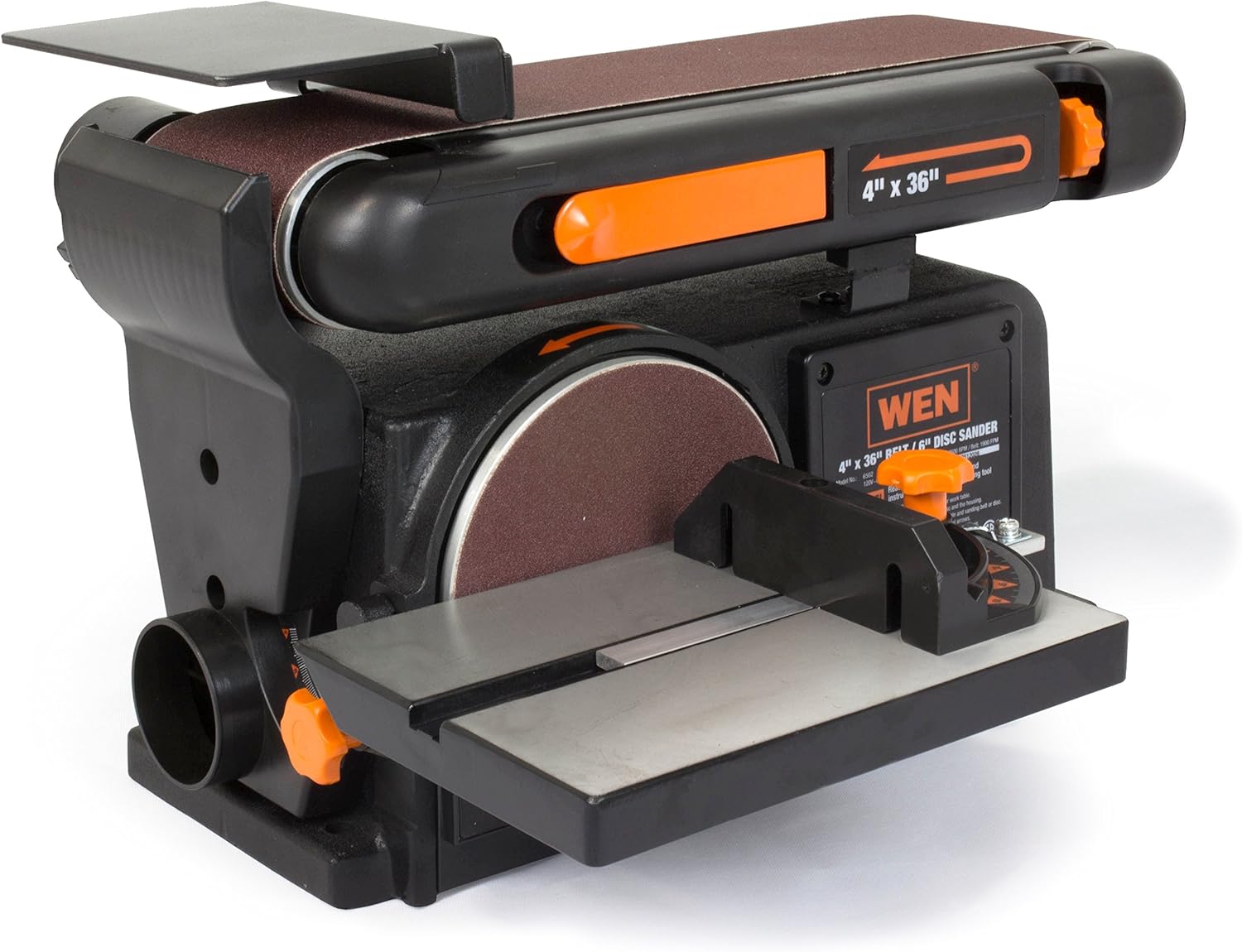
If you’ve ever hand-filed a weld bead flat and thought there has to be a faster way, a bench belt-and-disc sander combo is the answer your arms have been waiting for. The concept is simple: one benchtop machine combines a continuous abrasive belt (a loop of sandpaper running over two rollers) with a spinning abrasive disc (a flat, circular pad), giving you two complementary cutting surfaces on a single footprint. The belt is your workhorse for long passes and edge shaping; the disc is your precision tool for flat faces and tight angles. Together, they handle the grinding, deburring, and surface-prep tasks that angle grinders do aggressively and files do slowly. This guide walks through the specs that actually matter for metal — not wood, not hobbyist projects — including how the machine is powered, how hard you can run it, and what it will really cost you over three years of shop use.
Duty Ratings: The Number Every Buyer Underestimates
Duty rating is the percentage of time a motor can run under load before it needs to cool down. A machine rated for continuous duty can run flat-out, indefinitely. A machine rated for intermittent duty — say, 5 minutes on, 5 minutes off — will overheat and fail prematurely if you treat it like a continuous-duty tool.
Here’s the problem: most bench belt-and-disc sanders sold in the $90–$400 range are intermittent-duty machines. The motor is sized to hit a peak spec on a label, not to survive a full shift. For a weekend woodworker touching up furniture, that’s fine. For a welder who runs 20-minute deburring sessions on steel plate, that’s a warranty claim waiting to happen.
For metal fabrication, you want continuous-duty or a machine with a minimum 60% duty-rated motor. Foundry work and weld prep generate sustained load because metal removes material slowly and the abrasive belt heats up fast. An undersized motor doesn’t just fail — it bogs down under load, which kills your surface finish and accelerates belt wear at the same time.
Look for motors rated at least 3/4 HP (0.75 HP) for light shop use, and 1 HP or better if you’re running stainless, tool steel, or anything with long continuous passes. OSHA 1910.215 doesn’t specify a minimum HP for abrasive belt equipment, but it does require that guards and flanges match the wheel and disc rating — which means your disc must be rated for the RPM the motor delivers under load, not just at no-load speed.
By the numbers:
| Motor Size | Realistic Duty Class | Recommended Use |
|---|---|---|
| Under 0.5 HP | Intermittent (20–30%) | Hobbyist / light aluminum |
| 0.75–1 HP | Intermittent-to-continuous | General shop, mild steel |
| 1–2 HP | Continuous | Production fab, weld prep, stainless |
| 2 HP+ | Continuous, often 3-phase | Floor-standing or CNC-adjacent work |
Direct-Drive vs. Belt-Drive: What Changes in the Real World
The drive system is how motor torque gets from the shaft to your abrasive surfaces, and it is one of the most consequential decisions in this category — yet most product listings bury it in paragraph three.
Direct-Drive
In a direct-drive machine, the belt and disc are mounted directly to the motor shaft or a co-axial stub shaft. There is no intermediate transmission. The benefits are obvious: fewer parts, lower cost, simpler maintenance. At the $90–$350 price point, nearly everything is direct-drive.
The drawback is that your belt and disc speed is locked to motor RPM. A typical 1,725 RPM induction motor running a direct-drive 9-inch disc produces about 1,625 surface feet per minute (SFPM) at the disc edge — reasonable for aluminum or mild steel. If you need a different speed for titanium (which work-hardens fast and demands lower SFPM) or if you want to push harder on a roughing pass, you cannot adjust. You are at the mercy of the motor’s fixed RPM.
Direct-drive also transfers motor vibration directly to the work surface, which matters when you are trying to hold a flat finish on a precision part. It is not a dealbreaker for weld cleanup or edge chamfering, but it shows up on inspection.
Belt-Drive (Countershaft or V-Belt Systems)
Belt-drive machines interpose one or more V-belts and a pulley set between the motor and the abrasive surfaces. This lets the manufacturer — and sometimes the user, with pulley swaps — set belt and disc speed independently of motor RPM. Better machines in the $400–$1,800+ range frequently use belt drive for exactly this reason.
The mechanical benefits compound: belt drives absorb vibration, allow the motor to be repositioned for better balance and footprint, and let you run a slower-turning disc (better for heat-sensitive alloys) while the motor hums at its efficient operating RPM. The tradeoff is that V-belts wear and need periodic tensioning and replacement — typically every 12–24 months in a working shop. Budget $15–$45 per belt change depending on the drive configuration.
The practical rule: If you are touching up aluminum weldments or chamfering mild steel edges a few times a week, direct-drive is fine and the savings are real. If you are grinding tool steel, stainless, or running the machine daily across multiple materials, belt-drive pays for itself in abrasive belt life and surface quality within the first year.
For daily production use, JET JSG-6DCK — $1,869.00 units in the belt-drive tier are engineered for exactly this workload.
Abrasive Belt and Disc Economics: The TCO Nobody Prints
Every spec sheet shows MSRP. Almost none of them show what you will spend on belts and discs over three years. In a metal shop, consumable cost frequently exceeds machine cost within 18 months. Here is the math.
Belt consumption in metalwork is significantly higher than in woodworking. Metal loading (fine particles clogging abrasive pores) and heat glazing (resin breakdown from friction heat) kill belts fast, especially on stainless and high-carbon steels. Ceramic-grain and zirconia alumina belts formulated for metal are stocked by industrial distributors including MSC Industrial Supply — search their abrasives category by belt size and grain type for current pricing, as it shifts with grain type, grit, and quantity breaks. As a planning figure, quality ceramic or zirconia alumina belts purchased at quantity-ten or better still represent a consumable line item that demands early budgeting. A shop running the machine 2 hours a day on mild steel might burn through a belt every 2–4 days.
Disc consumption is somewhat more forgiving since pressure is user-controlled, but PSA (pressure-sensitive adhesive) discs for metal on a 9-inch platen still add up quickly when you factor volume use of aluminum oxide or zirconia alumina discs.
Three-year consumable math at moderate use (5 days/week) will vary by material and technique, but the structural point is consistent: on a machine that might cost $350 new, the abrasives over three years routinely reach multiples of the purchase price. This is why finishing engineers and shop managers repeat the same advice: buy a machine that runs cooler — belt-drive transmission, adequate HP, proper platen backup — because a cooler-running machine extends belt life by 30–60%, and that is where your real long-term savings live. The Fabricator covers abrasive finishing economics in its metalworking content and is worth bookmarking for anyone managing consumable spend across a shop floor.
For shops pricing out a full bench setup, the mid-tier machines that strike the right balance between upfront cost and consumable efficiency are worth a hard look.
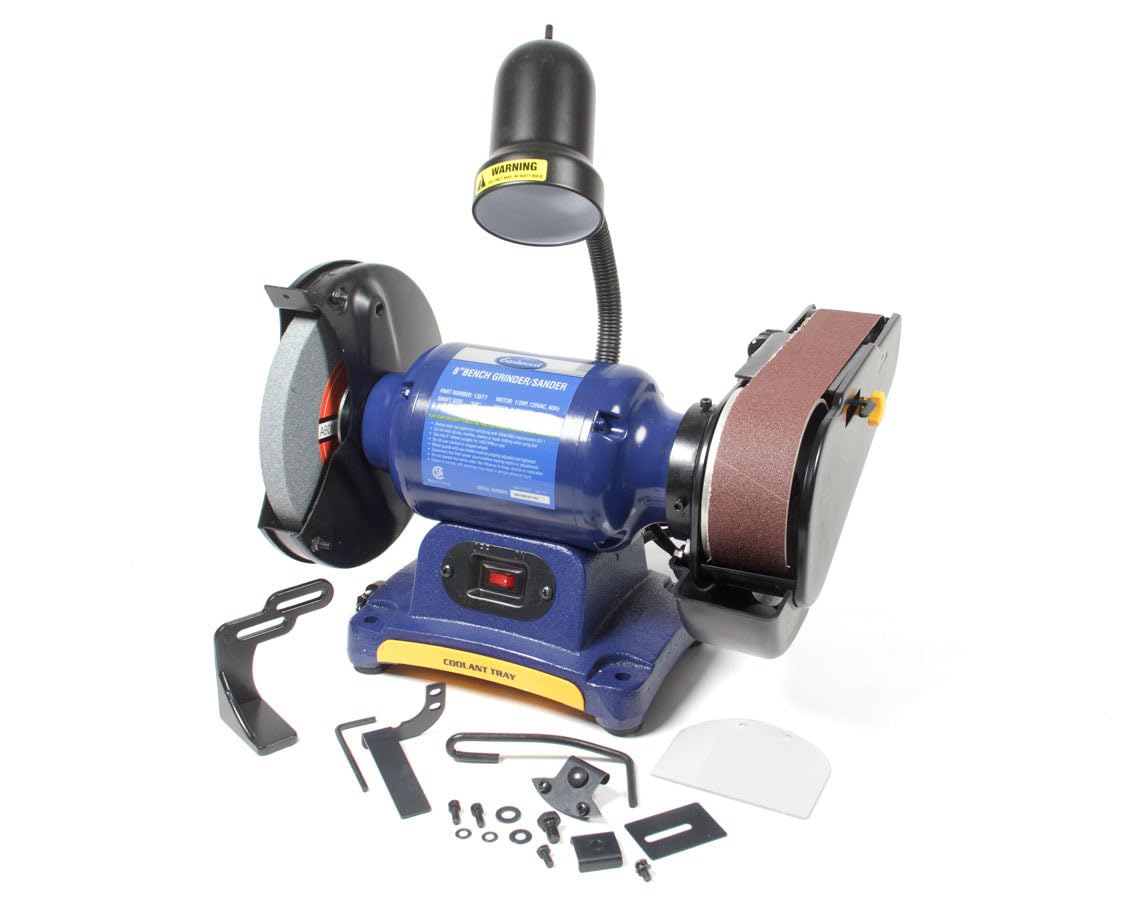
Eastwood
$191.87
In stock on Amazon
Check price on AmazonAnd if you are outfitting multiple stations or running production throughput that justifies the price delta:
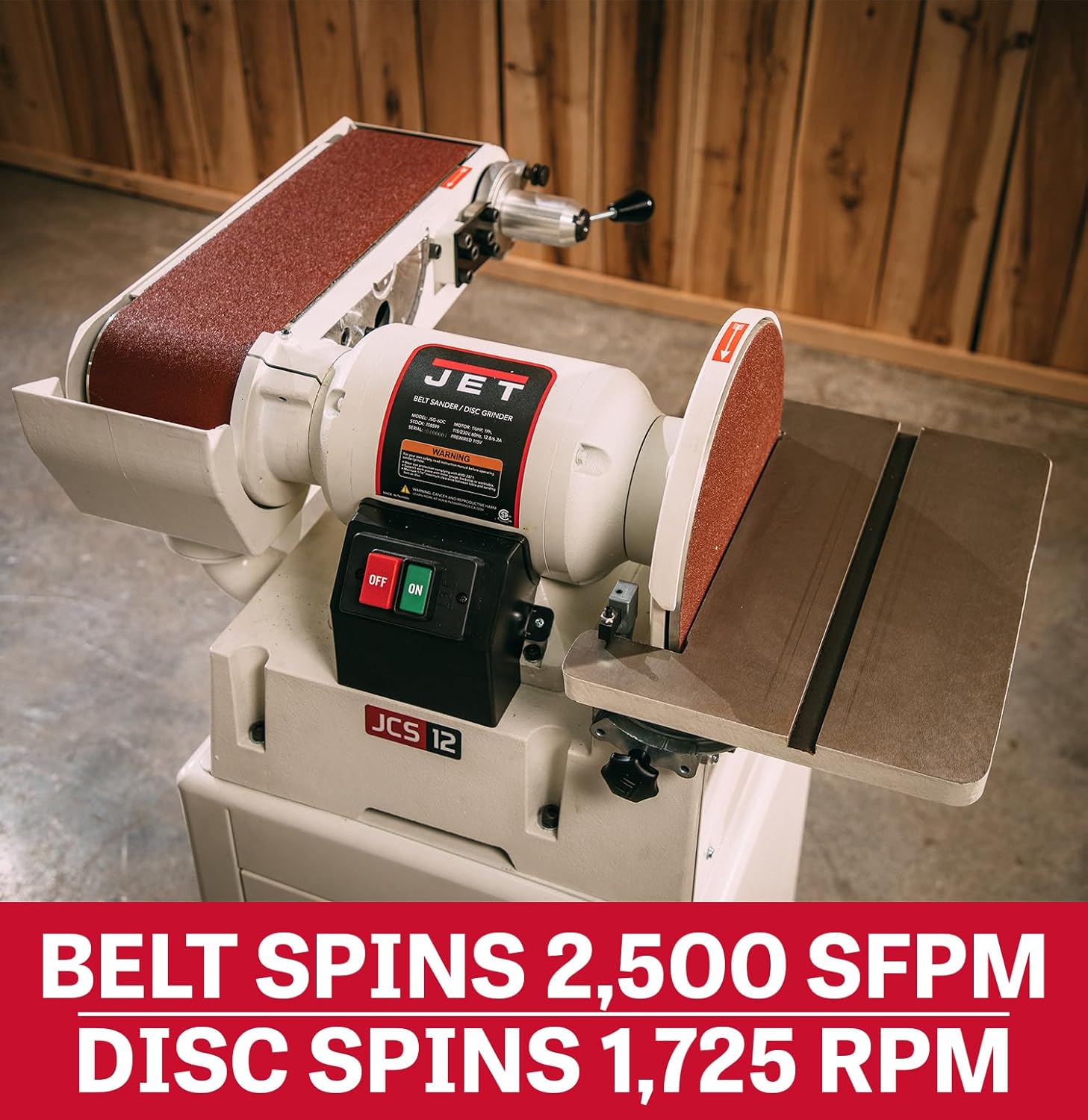
JET JSG-6DCK
$1,869.00
In stock on Amazon
Check price on AmazonANSI and OSHA Compliance: What You Actually Need to Check
ANSI B7.1 — Safety Requirements for the Use, Care, and Protection of Abrasive Wheels, published by the American National Standards Institute — covers grinding wheels and bonded abrasives; its companion guidance applies directly to the disc component of your combo machine. Because the ANSI standards portal requires account authentication to access document pages, reference ANSI B7.1 by its full title when specifying equipment for compliance purposes. The key compliance checkpoints for a bench belt-and-disc unit are as follows:
-
Disc guard coverage: OSHA 1910.215 requires that the top half of a grinding or sanding disc be enclosed by a guard. Many consumer-grade machines ship with inadequate guards — check this before the machine goes on a floor where it needs to pass inspection.
-
Work rest clearance: The adjustable work rest (the shelf in front of the disc) must be maintained at no more than 1/8 inch from the disc face. This is an OSHA citation magnet in shops — it is easy to neglect as the disc wears.
-
Maximum RPM rating on the disc: The abrasive disc must be rated at or above the spindle RPM. Never mount a disc with a lower RPM rating than your machine’s no-load speed. Check the disc label and your machine’s nameplate every time you swap discs.
-
Dust collection: Metal grinding dust — especially from stainless (hexavalent chromium) and aluminum (fire and explosion risk) — requires proper dust extraction. NFPA 484, Standard for Combustible Metals, published by the National Fire Protection Association and available at nfpa.org, addresses aluminum dust specifically. Most bench combo sanders lack integrated dust ports adequate for metal dust; plan for a dedicated shop vacuum or downdraft table connection.
For anyone running stainless or chrome-moly in any quantity, the dust extraction piece is not optional — it is the compliance gap that generates the most OSHA citations in small fab shops.
Eastwood
$191.87
In stock on Amazon
Check price on AmazonMatching the Machine to Your Work: Clear Decision Rules
After all the specs, the decision comes down to a few honest if/then frames:
If you run the machine fewer than 5 hours per week on mild steel or aluminum, a direct-drive unit at the budget or mid-tier level is genuinely sufficient. Do not pay for belt-drive features you will not use.
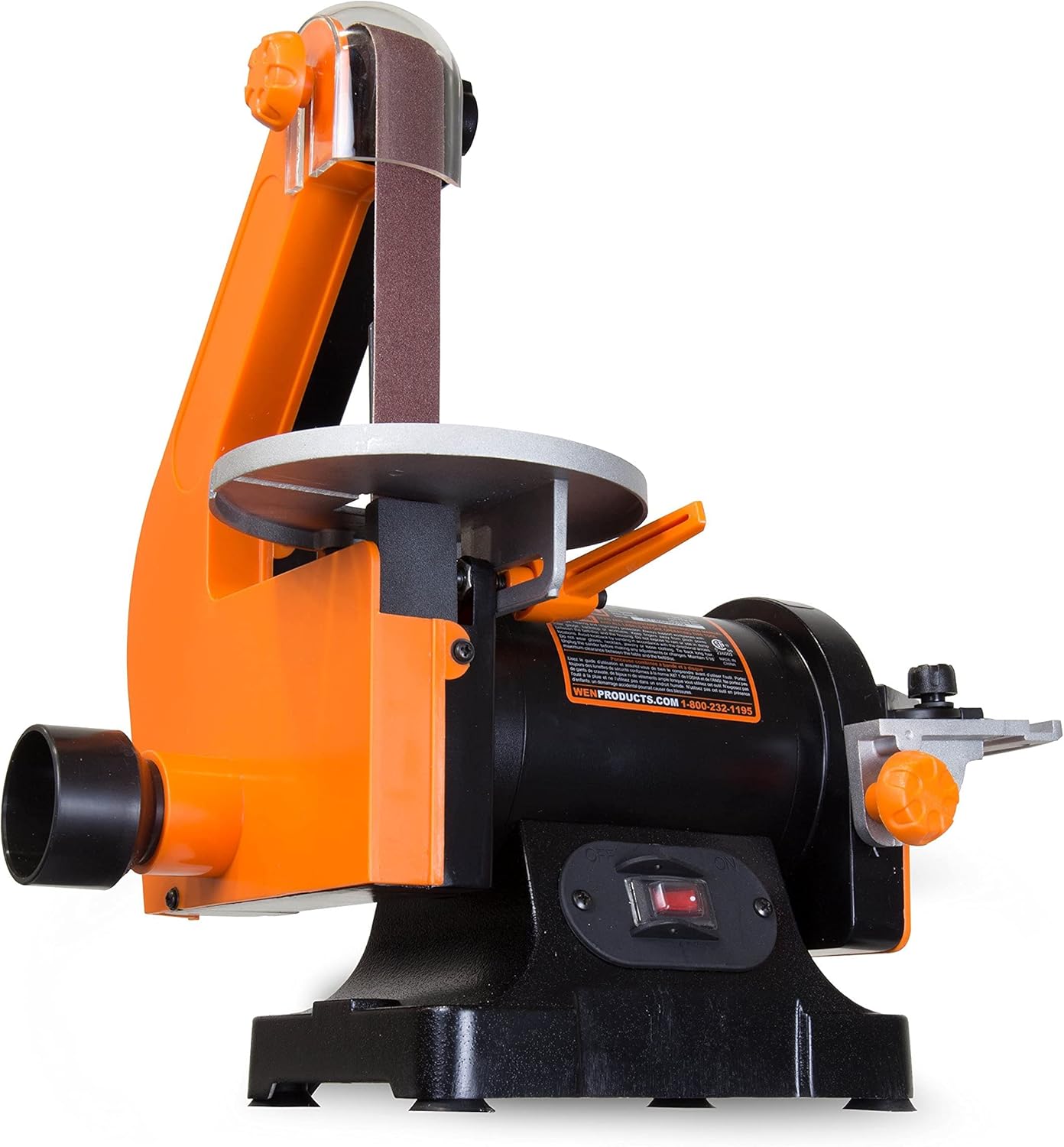
WEN 6515T
$90.55
In stock on Amazon
Check price on AmazonIf you are doing daily deburring, weld prep on mixed alloys, or outfitting a crew station that runs two shifts, you need a continuous-duty motor, belt-drive transmission, and a 1 HP minimum. The $400–$800 range covers this well.
Eastwood
$191.87
In stock on Amazon
Check price on AmazonIf you are working tool steel, stainless, or any material where heat and work-hardening are factors, or if downtime is expensive, step to the premium tier and factor belt-drive adjustability into your abrasive budget from day one.
JET JSG-6DCK
$1,869.00
In stock on Amazon
Check price on AmazonIf you are a tool-room manager outfitting multiple benches, buy one tier up from what you think you need. The intermittent-duty machine that gets run continuously fails at month 14. The replacement cost — machine, plus labor disruption, plus rush shipping — almost always exceeds the price difference between tiers. Reliable uptime is the spec that does not appear on any label.
JET JSG-6DCK
$1,869.00
In stock on Amazon
Check price on AmazonThe bench belt-and-disc combo is one of those tools that looks simple until you are 18 months in and wondering why your belts last three days and your finish looks rough. Get the duty rating right, understand what drive system your workload actually demands, and run the consumable math before you run your card. That is the whole decision.