May 16, 2026 • Dale Kosmicki • 9 min reading time • Prices verified May 24, 2026
Concrete Surface Grinders and Dust Shrouds: OSHA Silica Rule Compliance, Watt-Hours Per Square Foot, and What the Cheap Kits Miss
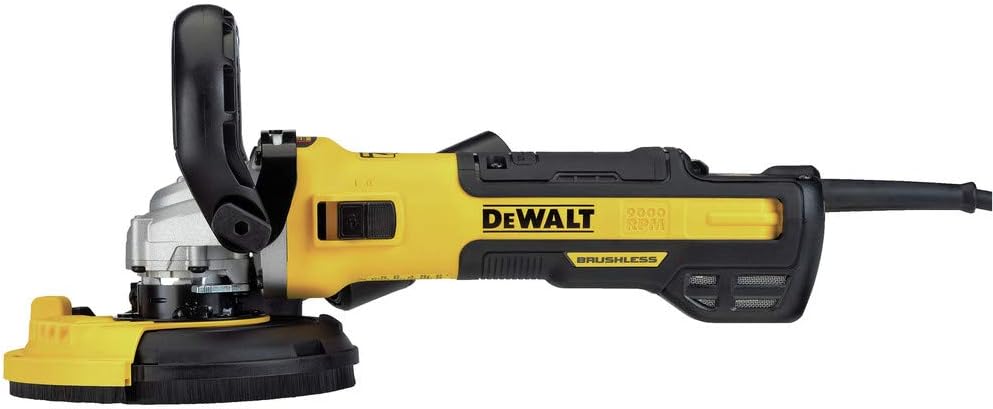
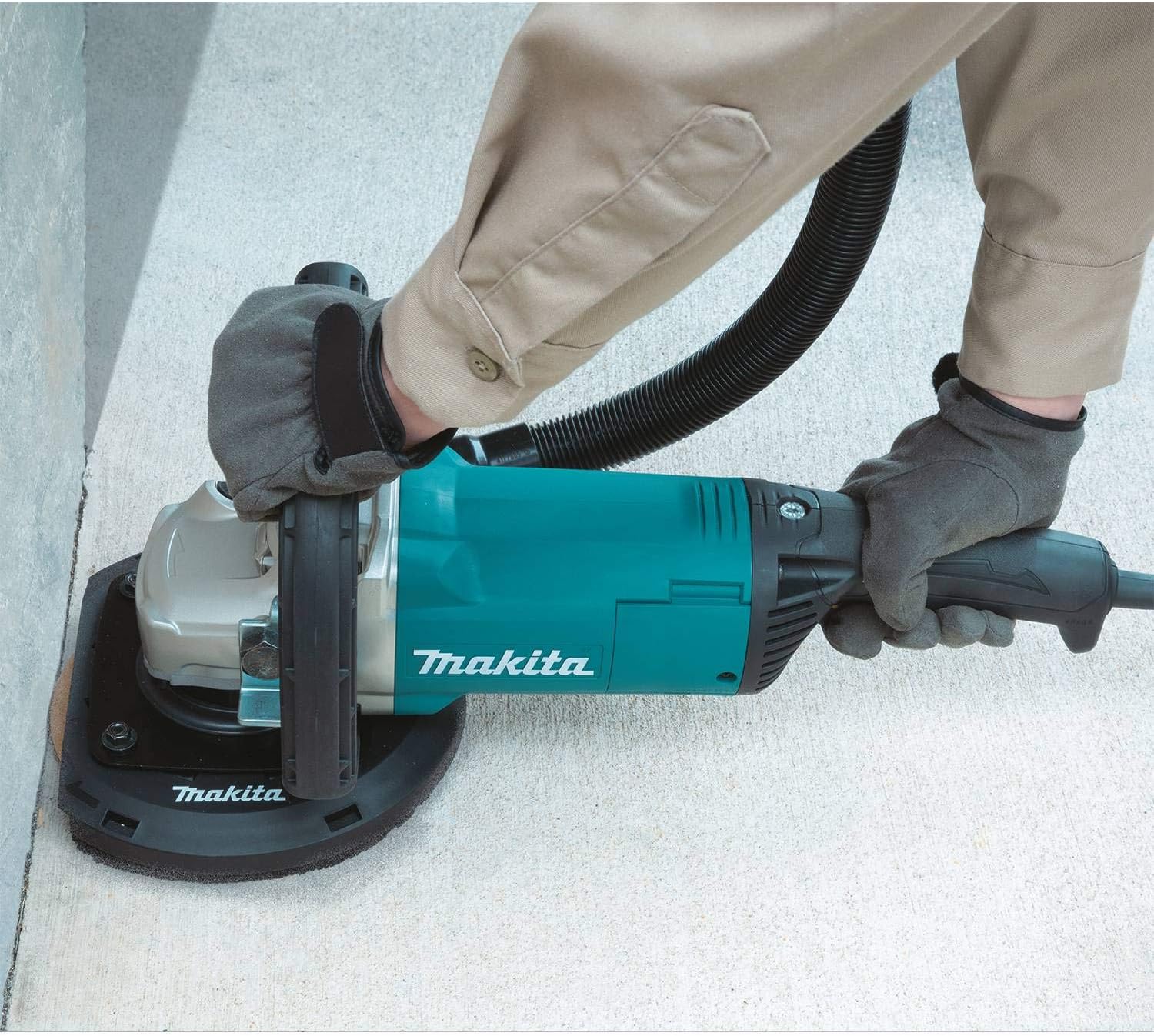
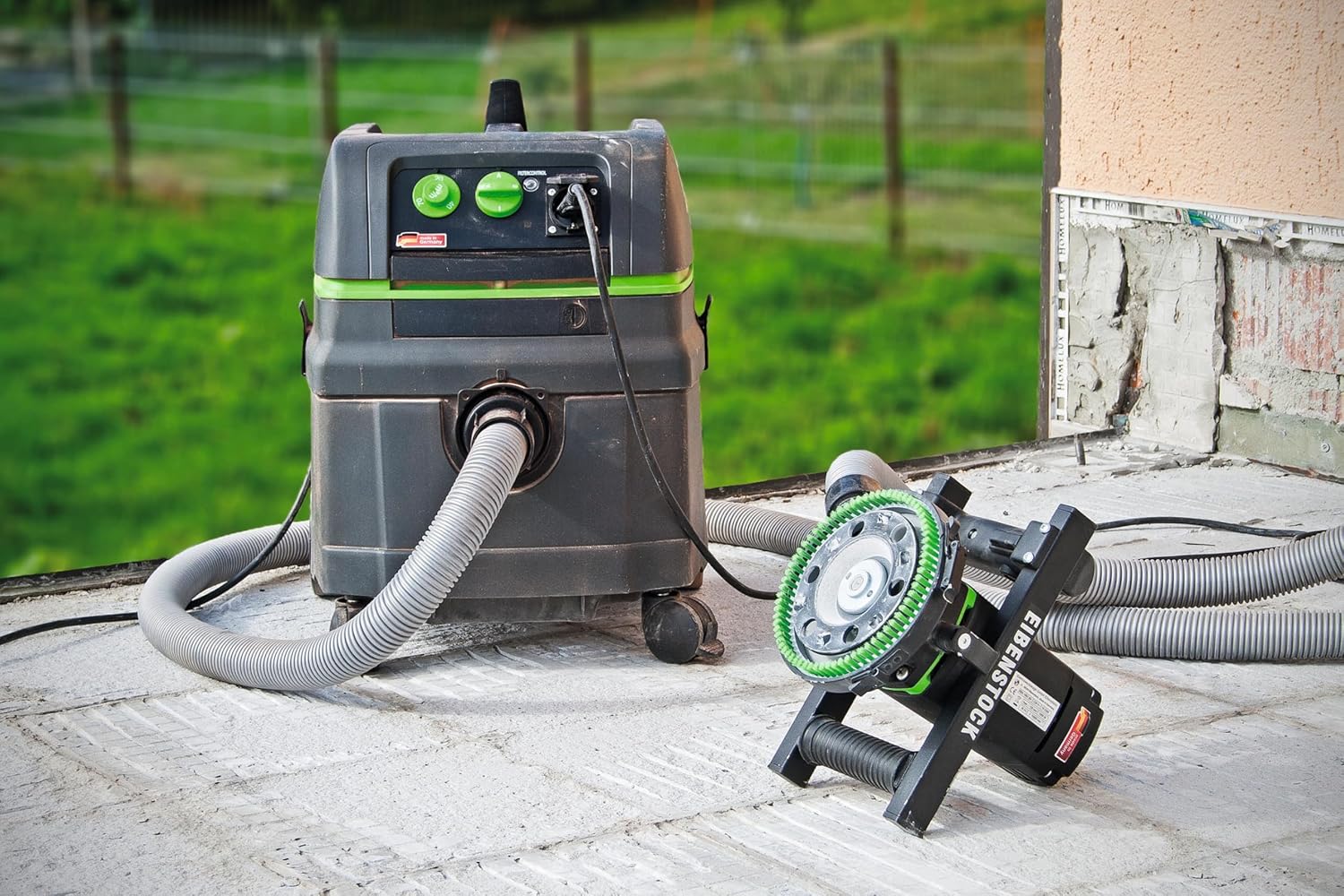
If you’ve ever watched a grinder chew across a concrete slab and seen that white cloud billow up around the operator’s knees, you’ve seen the hazard this article is about. Concrete contains crystalline silica — a mineral that, when ground into fine dust and inhaled, causes silicosis, an irreversible and potentially fatal lung disease. A concrete surface grinder is simply a power tool fitted with abrasive discs or diamond cup wheels that removes material from a concrete floor or slab — for leveling, coating prep, or surface profile work. A dust shroud is the hood-shaped attachment that wraps around the grinding head and connects to a vacuum so that dust gets captured before it reaches the air. OSHA now mandates specific controls for this combination of tool and process. This guide walks you through those legal requirements, shows you the real power math for sizing your setup, and explains exactly what the $89 dust-shroud kits skip that gets shops into trouble.
What OSHA’s Silica Rule Actually Requires — and the Line Shops Cross Without Knowing It
The rule is 29 CFR 1926.1153, OSHA’s Respirable Crystalline Silica Standard for Construction, which took full enforcement effect for most employers in 2018. It applies whenever workers use a grinder on concrete, masonry, or any silica-containing material. The standard’s most practical tool is Table 1 — a matrix that specifies which engineering controls are required for each grinding task. The full text of the standard, including Table 1, is published by OSHA at osha.gov/silica-crystalline/construction.
For handheld grinders used on concrete, Table 1 requires:
- A dust shroud connected to a vacuum rated at 25 CFM minimum airflow at the shroud inlet
- A vacuum with 99% or greater filter efficiency at 0.5 microns — which in practice means an H-class or HEPA-rated vacuum (not a standard shop vac)
- If the above controls are in place and used correctly, no air monitoring is required for those specific tasks, and no respirator is mandated for tasks under four hours. A half-face respirator with P100 filters remains recommended best practice for extended exposure.
This last point trips up a lot of shops: OSHA’s Table 1 compliance is a safe harbor. It means you don’t have to conduct air monitoring or medical surveillance for those specific tasks. Fall outside Table 1 controls — wrong vacuum class, leaking shroud, filter bypass — and you revert to the performance pathway under 29 CFR 1926.1153(d), which requires documented air monitoring and exposure assessment. That pathway is expensive and time-consuming to maintain.
The line most shops cross: running a standard wet/dry shop vacuum — which typically filters at 30–50 microns — behind a dust shroud and calling it compliant. Respirable silica particles range from 0.5 to 10 microns. A standard shop vac captures almost none of them. You get the optics of compliance without the protection.
According to NIOSH Publication No. 96-112, Preventing Silicosis and Deaths in Construction Workers (U.S. Centers for Disease Control and Prevention), filter bypass at the vacuum unit — caused by cracked housings, missing gaskets, or incorrectly seated filters — is among the most commonly documented failure modes in field studies of construction dust controls. That finding applies directly to budget all-in-one shroud kits that include a small shop-style vacuum, which almost universally lack the filter integrity testing of purpose-built dust extraction units.
Power Math: Sizing Your Grinder and Vacuum to the Job
This is where a lot of mid-level buyers under-spec a system. They buy a grinder with sufficient wattage for the concrete they’re grinding, then pair it with a vacuum that starves the shroud of airflow — which both defeats dust capture and can cause the grinder to run hotter as recirculated dust loads the air around the motor.
By the Numbers
| Task | Grinder power draw (typical) | Vacuum CFM required | Recommended vacuum power |
|---|---|---|---|
| Light coating removal, single-disc angle grinder | 900–1,400 W | 25 CFM minimum | 1,000–1,200 W |
| Medium surface prep, 5” planetary grinder | 1,200–2,000 W | 35–50 CFM | 1,200–1,800 W |
| Aggressive stock removal, dual-disc floor grinder | 1,800–3,000 W | 60–80 CFM | 2,000–3,000 W |
Watt-hours per square foot is the right metric for estimating job cost and tool sizing — not just the grinder’s peak draw. For standard concrete coating prep (CSP 2–3 profile), a well-maintained 7” single-head floor grinder running a medium-bond diamond segment typically covers 8–12 square feet per kilowatt-hour under load. A worn segment or mismatched bond hardness can cut that figure in half. That’s where consumable selection intersects directly with your power bill and your schedule.
A practical example: a 2,000-square-foot warehouse floor at 10 sq ft/kWh means 200 kWh of grinding energy. At a commercial electricity rate of roughly $0.12/kWh (U.S. Energy Information Administration, 2026 light industrial average estimate), that’s $24 in power — trivial. But if poor segment selection drops you to 5 sq ft/kWh, you double your labor hours. At a $35/hr labor rate for an experienced operator, that’s the real cost: an extra $140 in labor, not the extra $24 in power. The math always favors the right consumable over the cheapest consumable.
What the Cheap Dust Shroud Kits Actually Miss
The $60–$120 dust shroud kits sold as universal angle grinder attachments are not necessarily junk — but they make design compromises that matter for compliance and for actual dust capture.
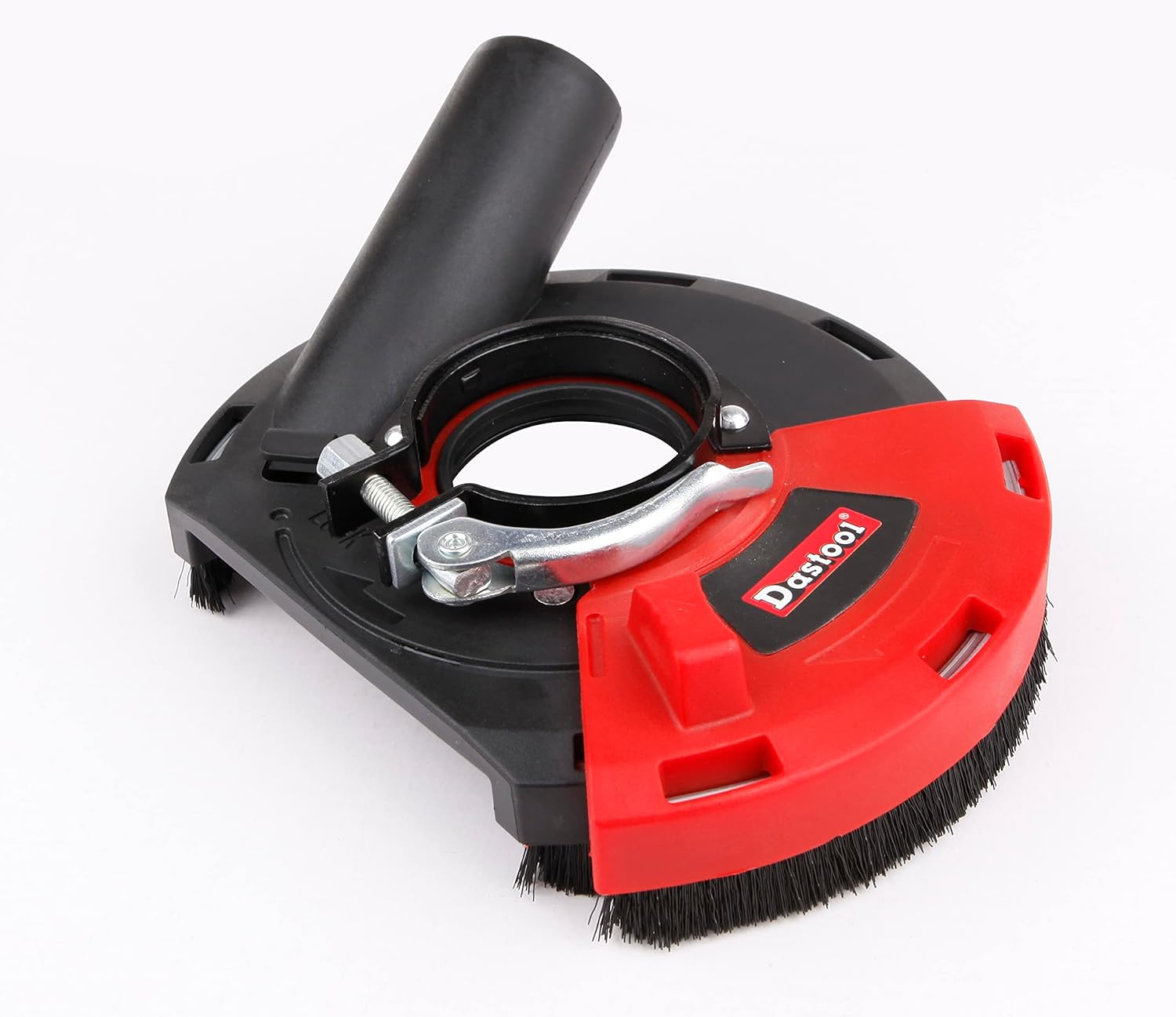
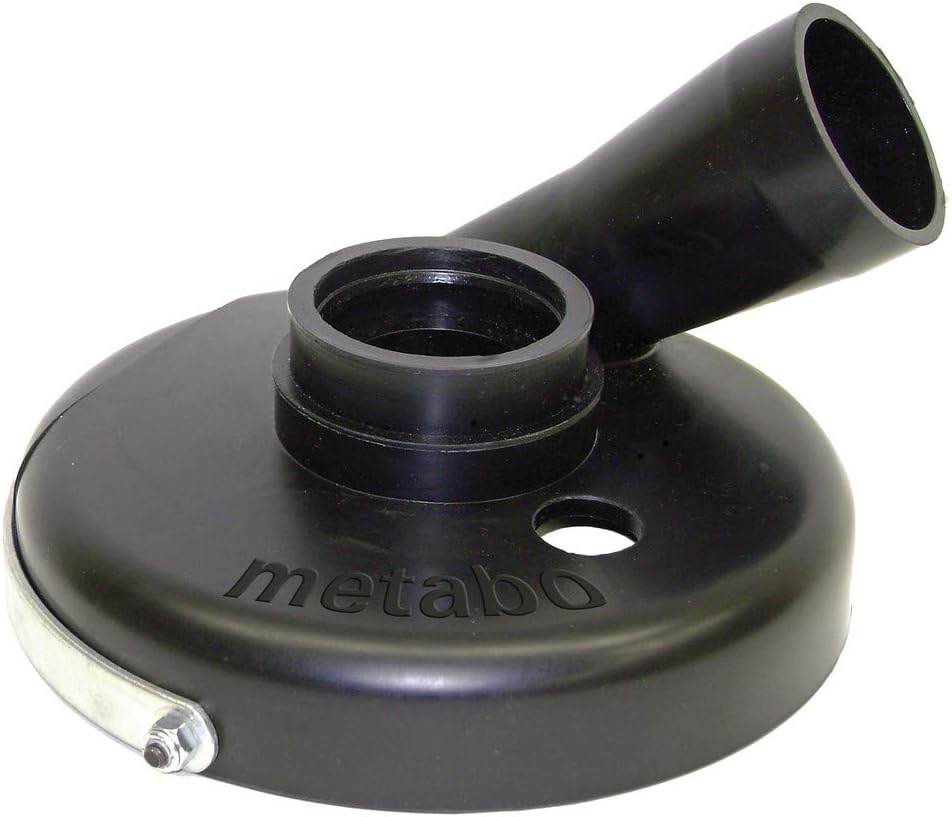
Fitment gaps are the primary failure. A shroud that doesn’t form a near-seal against the work surface lets ambient air rush in, diluting the negative pressure inside the shroud and carrying dust out the gap rather than into the vacuum hose. Quality shrouds use a brush or rubber skirt perimeter that conforms to the surface. Budget kits often use a rigid plastic lip — which works fine on a perfectly flat slab and fails on any crowned, textured, or irregular surface.
Hose diameter matters more than it looks. The 1.25” hose that ships with many budget shroud kits creates enough restriction to drop your vacuum’s effective CFM by 30–40% at the shroud inlet, even if the vacuum itself is rated adequately. The standard for industrial dust extraction systems is a 1.5” to 2” hose for grinding applications. Check the shroud’s inlet diameter before you buy.
Filter bypass in the vacuum. Even with an H-class or HEPA vacuum, a cracked filter housing, a missing gasket, or a filter installed backward routes unfiltered exhaust air back into the work area. As noted by NIOSH in Publication No. 96-112, Preventing Silicosis and Deaths in Construction Workers, this failure mode is well-documented in field observations of construction silica controls. Budget all-in-one kits that bundle a small shop-style vacuum almost universally lack the filter integrity of purpose-built dust extraction units.
For a shop doing occasional grinding — say, prep work before a coating job twice a year — a purpose-built dust shroud paired with a rental or borrowed H-class vacuum is a reasonable path. That’s the floor-level solution that gets you to Table 1 compliance without owning a full extraction system.
Makita
In stock on Amazon
Check price on AmazonFor a shop doing regular grinding as part of a floor coating, surface preparation, or remediation workflow, you need a matched system. The shroud, hose diameter, vacuum CFM, and filter class all have to be sized together.
Expert
$33.99
In stock on Amazon
Check price on AmazonThat mid-range system — typically a 5” or 7” angle grinder with a fitment-matched shroud and a purpose-built 1,200–1,500W dust extractor — is where most job shops doing periodic grinding live. It handles Table 1 compliance reliably, the filtration is auditable, and the total system cost lands in the $400–$800 range depending on whether you already own a compliant grinder.
Metabo
$509.00
In stock on Amazon
Check price on AmazonFor production crews doing daily grinding — flooring contractors, restoration shops, industrial facilities with ongoing coating maintenance — the floor-standing or cart-mounted dual-disc grinder with an integrated 3-motor dust extraction system is the right platform.
CS
$818.50
In stock on Amazon
Check price on AmazonAt this tier you’re looking at systems in the $2,500–$6,000+ range for the extractor alone, but the math on daily use justifies it quickly: a compliant H-class unit at this scale does not need filter changeouts as frequently as undersized extractors, and you avoid the audit and documentation burden that comes with operating outside Table 1’s safe harbor.
Comparing Your Options: A Decision Framework
Here’s a structured view of the three tiers, with the key compliance and performance differentiators that actually matter at each level:
| Tier | Typical user | Shroud fit quality | Vacuum class | Table 1 compliant? | Pick |
|---|---|---|---|---|---|
| Budget ($80–$250 total) | Occasional use, small area | Rigid lip, limited surface conformance | Often standard shop vac — not compliant | Only with upgraded vacuum | Makita — |
| Mid ($400–$900 total) | Regular shop prep, crew use | Brush/rubber skirt, better seal | H-class extractor, 1.5” hose | Yes, when properly maintained | Expert — $33.99 |
| Premium ($1,500–$6,000+ total) | Daily production, large area | Purpose-built integration | Industrial H-class, multi-stage | Yes | CS — $818.50 |
The single most important row in that table is the budget tier’s “Only with upgraded vacuum” note. A $90 shroud kit paired with a $60 shop vac is not a dust control system. It’s a prop. If an OSHA compliance officer checks your vacuum’s filter specification, that combination fails immediately. The fix is not an expensive grinder — it’s the right vacuum. You can run a budget shroud on an H-class extractor and be Table 1 compliant for far less than most shops assume.
Making the Call: If X, Then Y
If you’re grinding concrete fewer than a dozen times per year on areas under 500 sq ft: buy a quality dust shroud with a rubber skirt, rent an H-class dust extractor for the job, and document the setup in your safety log. Don’t buy a full extraction system you’ll use twice. Expert — $33.99
If you’re running a crew that does surface prep as a regular part of your workflow: invest in a matched mid-tier system with a purpose-built extractor. Budget for filter replacement as an ongoing consumable — H-class filters are not reusable indefinitely, and filter costs belong in your job estimate. CS — $818.50
If grinding is a daily production task: specify the grinder, shroud, and extractor as a system from the same manufacturer or integration partner. The performance and compliance documentation are cleaner, the filter specs are matched, and when something breaks, you have one point of contact. CS — $818.50
The bottom line is that OSHA’s silica rule isn’t a paperwork problem — silicosis is a real occupational hazard that takes years to manifest and no amount of retroactive compliance cures. The engineering controls the rule requires are genuinely effective when implemented correctly. A properly sized shroud, the right vacuum class, and a filter integrity check before every shift is a twenty-minute investment that keeps your crew healthy and your shop out of a citation. The cheap kit misses the vacuum class, the hose diameter, or the shroud seal — sometimes all three. Know which variable your current setup is failing before you spec the next one.