May 16, 2026 • Dale Kosmicki • 9 min reading time • Prices verified May 24, 2026
Cordless Die Grinders: Milwaukee M12/M18 FUEL vs. DEWALT 20V MAX and the Budget Brushless Field
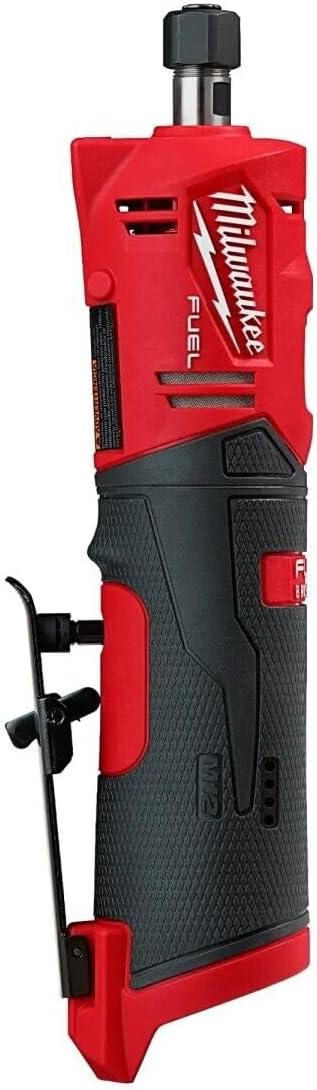
A die grinder is a handheld rotary tool — think of it as a small, high-speed spindle you hold like a thick marker — used for grinding, deburring, porting, and surface blending on metal parts. Unlike an angle grinder (the larger disc-style tool common on fab floors), a die grinder spins a small mounted point, carbide burr, or flap wheel, and it excels in tight spots: weld toes, inside radii, ports, and corners that a 4.5-inch disc can’t reach. Until recently, every die grinder on a shop floor ran on compressed air. Today’s cordless brushless models have closed most of the gap with pneumatic tools, and for shops that want to reduce hose drag, avoid compressor scheduling conflicts, or outfit a mobile crew, the battery-powered options are genuinely worth specifying. This guide breaks down the two dominant platforms — Milwaukee M12/M18 FUEL and DEWALT 20V MAX — and compares them honestly against the growing field of budget brushless options that have arrived in 2025–2026.
What “Brushless” Actually Buys You in a Die Grinder
Brushless motors eliminate the carbon brush contact that wore out earlier cordless tools and wasted energy as heat. In a die grinder, that matters for two practical reasons: runtime per charge goes up roughly 25–40% versus an equivalent brushed motor, and the tool runs cooler under sustained load, which directly affects duty cycle — how long you can grind before the motor protection circuitry throttles or shuts down to protect the windings.
For occasional weld cleanup (a few passes, a couple times a day), duty cycle is almost irrelevant. For production deburring on a conveyor-fed line or porting work that runs 20–30 minutes continuously, it becomes the spec you should be designing around, not the no-load RPM printed on the box.
No-load RPM is the other spec that gets inflated in marketing. Die grinders are typically rated at 20,000–30,000 RPM no-load, but under any meaningful cutting pressure, speed drops significantly. Milwaukee’s FUEL electronics do active load-sensing and try to maintain speed under load — a feature they call “Redlink Plus” — which is meaningful for consistent material removal rates. Whether that advantage survives contact with carbide burrs in hardened steel at a real fab shop is a question application benchmarks published by The Fabricator address in detail. The short answer is: yes, it’s measurable, but the gap narrows when you move from hard carbide work to flap-wheel blending.
Milwaukee M12 vs. M18 FUEL: Picking the Right Voltage for the Job
Milwaukee’s two die grinder platforms solve different problems, and mixing them up is one of the most common spec mistakes.
The M12 FUEL is a compact, 1/4-inch collet grinder that weighs around 1.4 lbs tool-only. It runs up to 32,000 RPM and fits into spaces where the larger M18 body simply won’t go. If your techs are doing weld cleanup on pipe spools, automotive porting, or any confined-space work, the M12’s size advantage is real. Battery runtime on a 2.0Ah M12 pack gives you roughly 20–25 minutes of active grinding on aluminum; that drops to 12–18 minutes on steel or stainless with carbide burrs, based on manufacturer cycle-life data and independent shop reports.
The M18 FUEL is a larger platform, running at up to 25,000 RPM but with substantially more torque reserve. The M18 pack capacity options (3.0, 5.0, and 6.0Ah as of 2026) mean you can tune runtime for your application. If your shop is already on Milwaukee M18 for angle grinders, impact wrenches, or drills, battery and charger compatibility across the platform is a real cost argument — you’re not adding a new charging ecosystem.
By the numbers — Milwaukee platform comparison:
| Model | Voltage | Max RPM | Tool Weight (bare) | Collet Size |
|---|---|---|---|---|
| M12 FUEL Die Grinder | 12V | 32,000 | ~1.4 lbs | 1/4 in |
| M18 FUEL Die Grinder | 18V | 25,000 | ~2.1 lbs | 1/4 in |
For shops where techs work overhead or in confined spaces all day, the M12’s weight advantage over a full shift is not trivial. For benchtop or floor-level production work with carbide stock removal, the M18’s torque headroom earns its weight penalty.
DEWALT
$146.00
In stock on Amazon
Check price on Amazon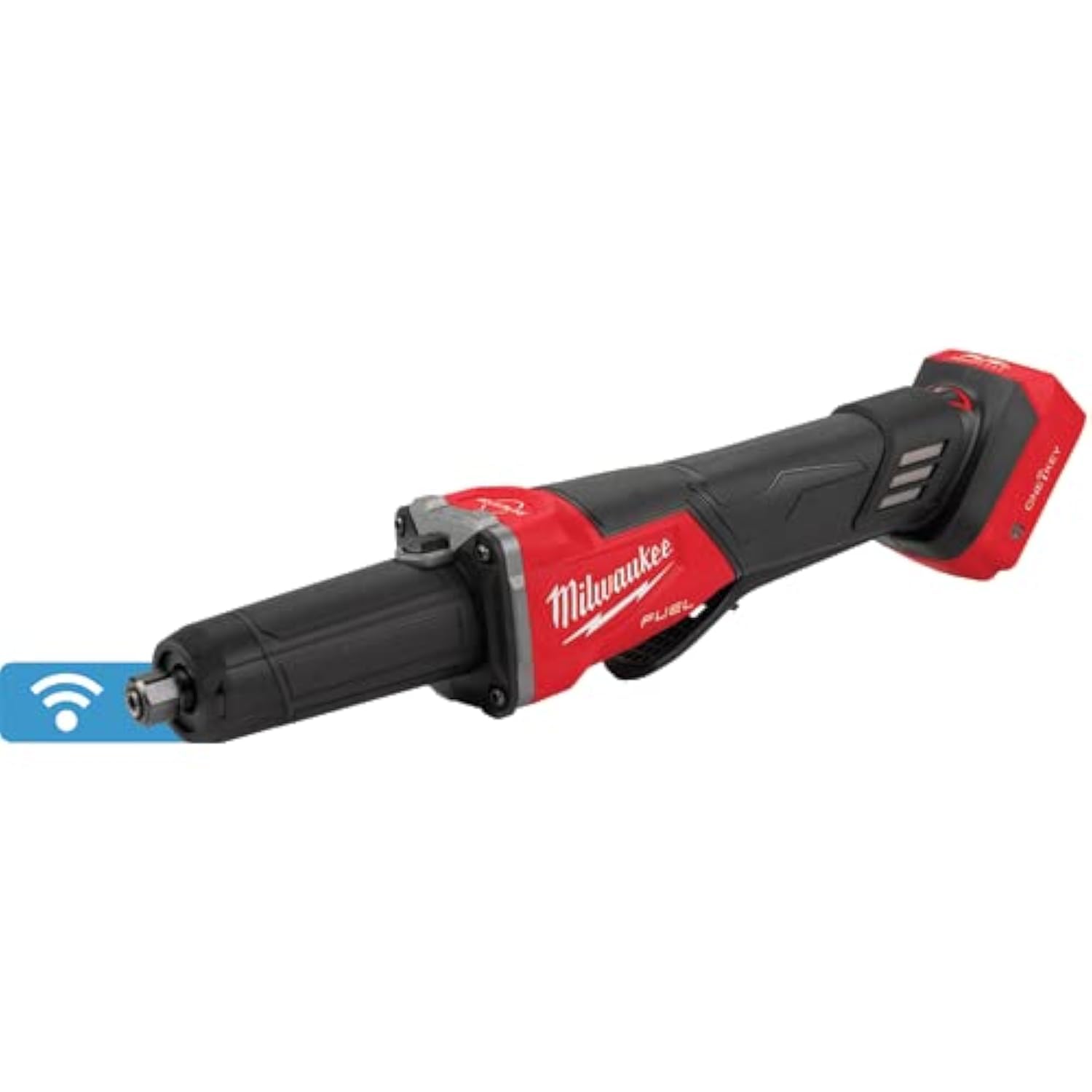
Milwaukee
$255.00
In stock on Amazon
Check price on AmazonDEWALT 20V MAX: Where It Wins and Where It Doesn’t
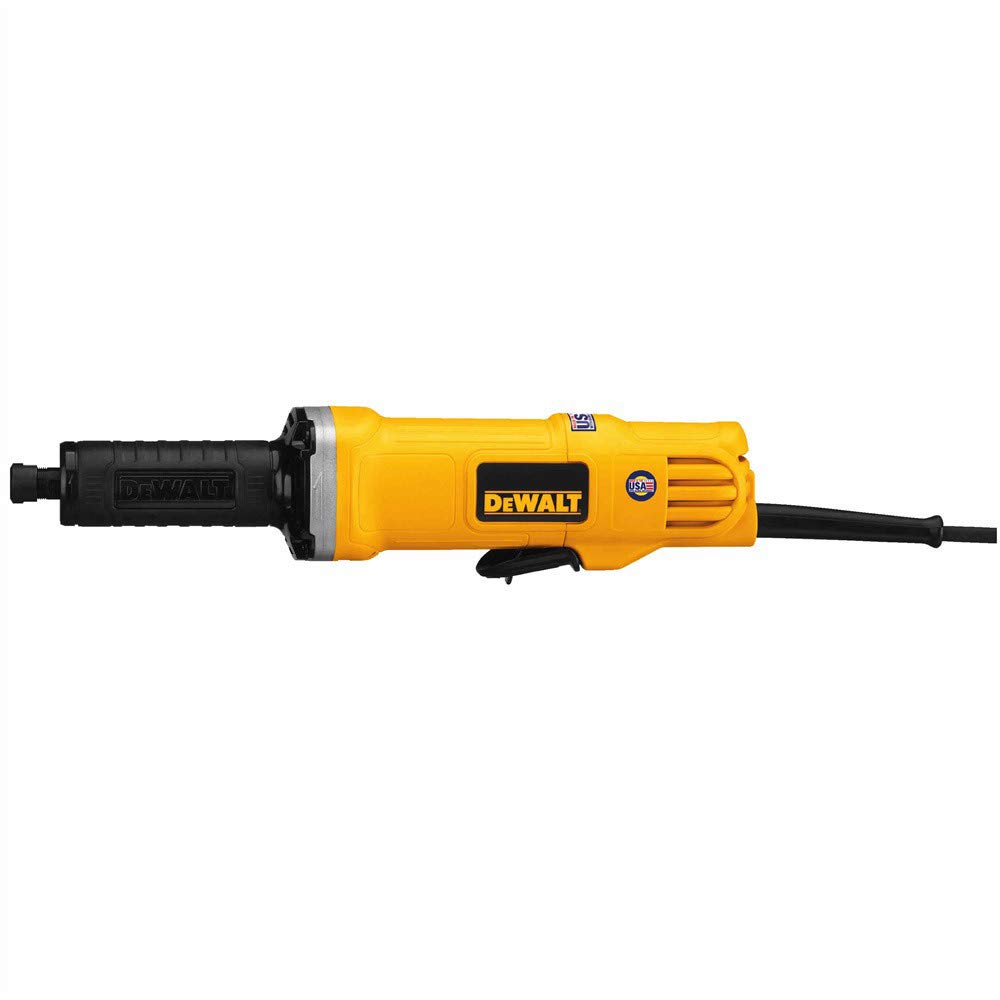
DEWALT’s 20V MAX die grinder runs at up to 25,000 RPM and shares its battery platform with DEWALT’s angle grinders, drills, and reciprocating saws — a meaningful argument for shops already standardized on the yellow ecosystem. The tool is competitively priced against Milwaukee’s M18 FUEL; for current street pricing, check your preferred industrial distributor’s current cordless die grinder listings, as pricing across major platforms shifts frequently in this category.
Where DEWALT earns points: the ergonomics are generally well-reviewed for right-angle work, the variable speed trigger is smooth, and the battery interoperability across a large DEWALT 20V lineup reduces the per-tool battery cost if you’re buying a full shop kit. DEWALT’s FLEXVOLT battery (which steps up to 60V on compatible tools) doesn’t apply to the die grinder platform, so you’re working in the 20V MAX envelope.
Where DEWALT trails Milwaukee’s M18 FUEL in this specific tool category: Milwaukee’s Redlink load-sensing electronics produce noticeably more consistent speed under heavy carbide load in back-to-back production tests. DEWALT’s motor protection is functional, but Milwaukee has invested more deeply in the intelligence layer for sustained-load tools. If your die grinder work is light-to-medium — flap wheels, small mounted points, occasional burr passes — the gap is largely irrelevant. If you’re running the tool hard for 15+ minutes at a stretch, that electronic speed-maintenance is worth the modest price premium.
DEWALT
$146.00
In stock on Amazon
Check price on AmazonDEWALT
$146.00
In stock on Amazon
Check price on AmazonThe Budget Brushless Field: What’s Actually Viable in 2026
The past 18 months have brought a wave of brushless cordless die grinders from second-tier and house brands — some of them genuinely usable, some that will frustrate your crew inside 90 days. A few things to evaluate before you commit:
Motor protection circuitry matters more than RPM spec. A cheap brushless die grinder may hit 30,000 RPM no-load but lack meaningful thermal or stall protection. When a tech leans into a tough port radius, the tool throttles hard or trips out — which costs time and builds distrust in the tool. Check whether the manufacturer documents their overcurrent and thermal trip thresholds; most budget brands don’t.
Collet runout. Die grinding is a precision task. Excessive collet runout (wobble in the spinning tip) causes chatter, poor surface finish, and accelerated burr wear. Budget brands rarely publish runout specs. If you’re doing aesthetic surface work or holding tight geometry on ports, this matters.
Battery availability and longevity. A dead-brand battery pack two years from now is a real procurement headache. Budget platforms that use industry-standard 20V or 18V cell configurations with broadly available replacement packs (even third-party compatible ones) are less risky than proprietary voltage platforms.
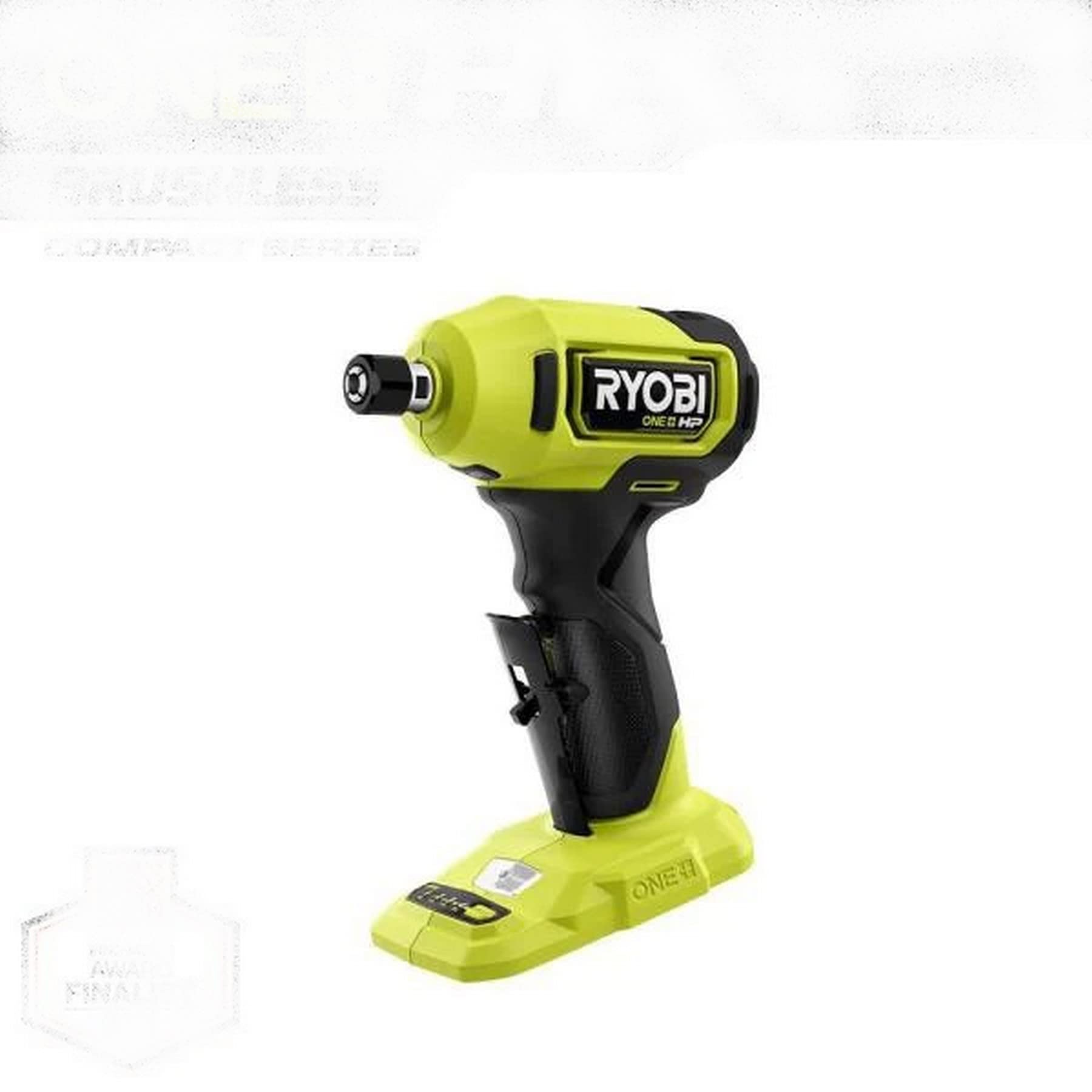
For shops that need an occasional-use tool and won’t be running it hard — light deburring, occasional weld toe blending, light aluminum work — a budget brushless pick in the $79–$120 range is a defensible choice. You’re not paying for electronics you won’t stress.
RYOBI
$83.79
In stock on Amazon
Check price on AmazonRYOBI
$83.79
In stock on Amazon
Check price on AmazonFor a crew running die grinders daily across multiple stations, the total cost of ownership math tilts toward the name-brand platforms fast. Factor in consumable waste from poor speed consistency, crew time lost to tool trips, and the cost of replacing a cheap unit at 14 months instead of 4+ years.
Safety Compliance: What OSHA and ANSI Require of Cordless Die Grinders
OSHA Standard 1910.215 covers abrasive wheel machinery and establishes requirements for guarding, maximum operating speeds, and wheel/disc compatibility. The critical compliance point for cordless die grinders: the tool’s maximum RPM rating must never exceed the RPM rating marked on the mounted point, burr, or wheel. This is a non-negotiable matching requirement, not a guideline.
ANSI B7.1 — Safety Requirements for the Use, Care and Protection of Abrasive Wheels, published by the American National Standards Institute — provides the underlying wheel and point safety standards that OSHA references. Consult the current edition of ANSI B7.1 directly through ANSI or your distributor’s compliance library to confirm accessory ratings. Any mounted point or abrasive accessory you spec for cordless use should be rated at or above your tool’s maximum no-load RPM — typically 25,000–32,000 RPM for the tools in this comparison.
Both Milwaukee and DEWALT ship their die grinders with guard and collet systems that meet these requirements when used with properly rated accessories. The compliance gap in the field usually isn’t the tool — it’s the crew grabbing an unmarked or under-rated accessory from a miscellaneous bin. Build an accessory spec sheet for your shop that matches RPM ratings to each tool platform, and audit it when new consumable stock arrives.
For shops with dust exposure concerns (aluminum grinding, in particular, generates combustible fine particulate), NFPA 484 — Standard for Combustible Metals, published by the National Fire Protection Association — applies to your housekeeping and ventilation requirements, not just the tool itself. The current edition of NFPA 484 is available directly from nfpa.org.
Decision Framework: Which Platform for Your Shop
Here’s the honest “if X, then Y” matrix:
If your crew works in confined spaces, overhead, or on pipe/tube work daily: Milwaukee M12 FUEL. The weight and size advantage over a full shift adds up to less fatigue and better access. Accept the shorter runtime and plan battery rotation.
Milwaukee
$192.97
In stock on Amazon
Check price on AmazonIf you’re running a mixed shop already on Milwaukee M18 and want one battery platform: Milwaukee M18 FUEL. The ecosystem cost savings and torque headroom for sustained work make it the rational choice even if the M12 is theoretically the “right size” tool.
Milwaukee
$255.00
In stock on Amazon
Check price on AmazonIf your shop is standardized on DEWALT 20V MAX across other tools: DEWALT 20V MAX die grinder. The battery interoperability argument is real money, and the tool performs well for typical fab work. You’re not leaving production on the table unless your die grinder work is unusually heavy.
DEWALT
$146.00
In stock on Amazon
Check price on AmazonIf you need to outfit occasional-use stations on a constrained budget: A budget brushless pick is defensible for light use. Vet the motor protection specs and check battery platform longevity before committing to a brand you haven’t seen in the channel for at least two years.
RYOBI
$83.79
In stock on Amazon
Check price on AmazonIf you’re running production deburring or porting with carbide at sustained load: Milwaukee M18 FUEL’s load-sensing electronics earn their keep here. Calculate the cost-per-hour on consumable waste from speed inconsistency on cheaper platforms before optimizing on tool price.
Milwaukee
$192.97
In stock on Amazon
Check price on Amazon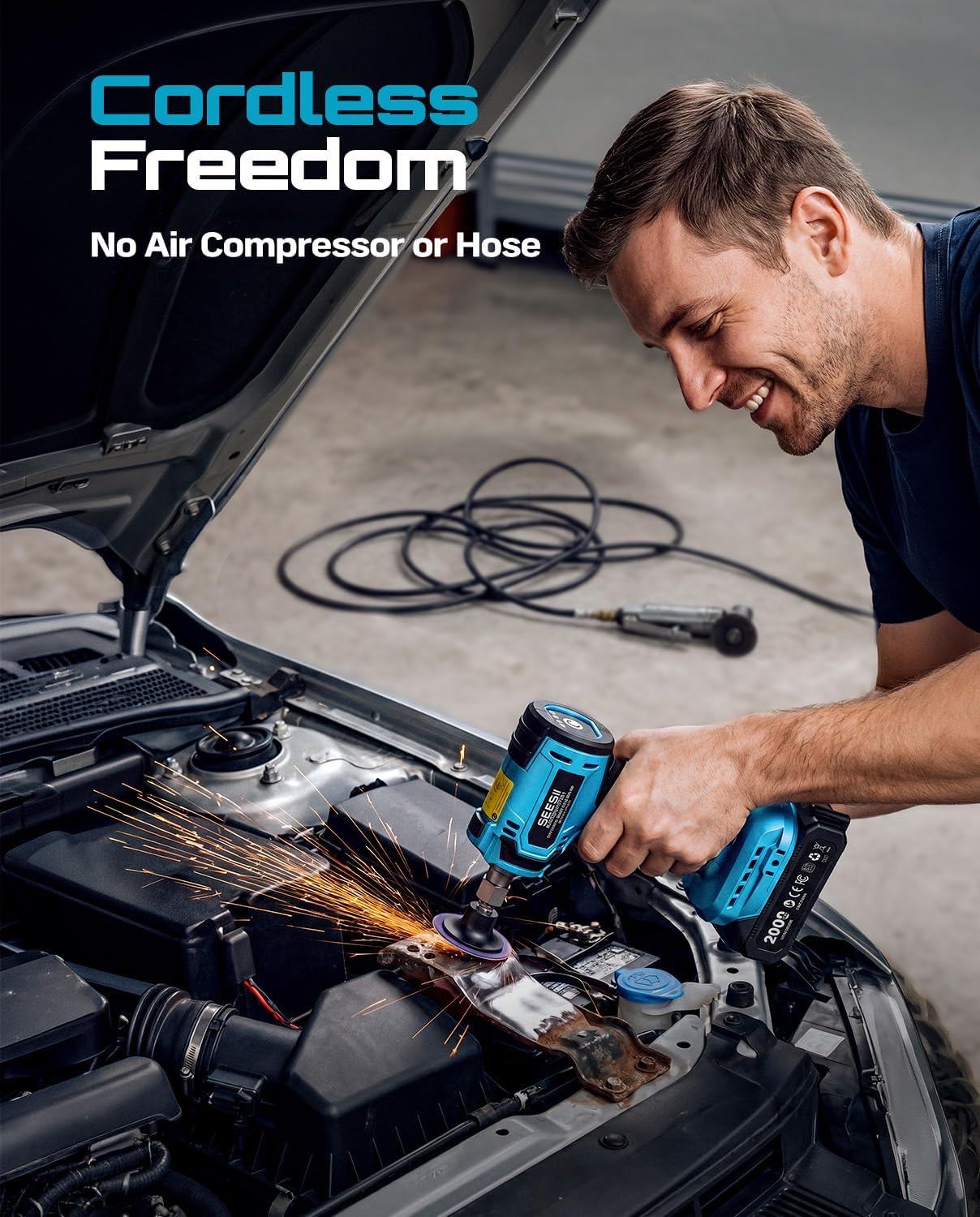
SEESII
$99.99
In stock on Amazon
Check price on AmazonThe battery cordless die grinder market in 2026 is mature enough that any of the name-brand platforms will serve a competent shop well. The decision is mostly an ecosystem and use-case question, not a “which brand is good” question. Know your duty cycle, match your accessories to rated RPM per OSHA 1910.215, and don’t let a $40 difference in tool cost drive a platform decision that locks your battery purchasing for the next five years.