May 16, 2026 • Dale Kosmicki • 10 min reading time • Prices verified May 24, 2026
Small Variable-Speed Belt Grinders for Knife Making and Weld Finishing: When a 30×1 Is Enough and When It Isn't
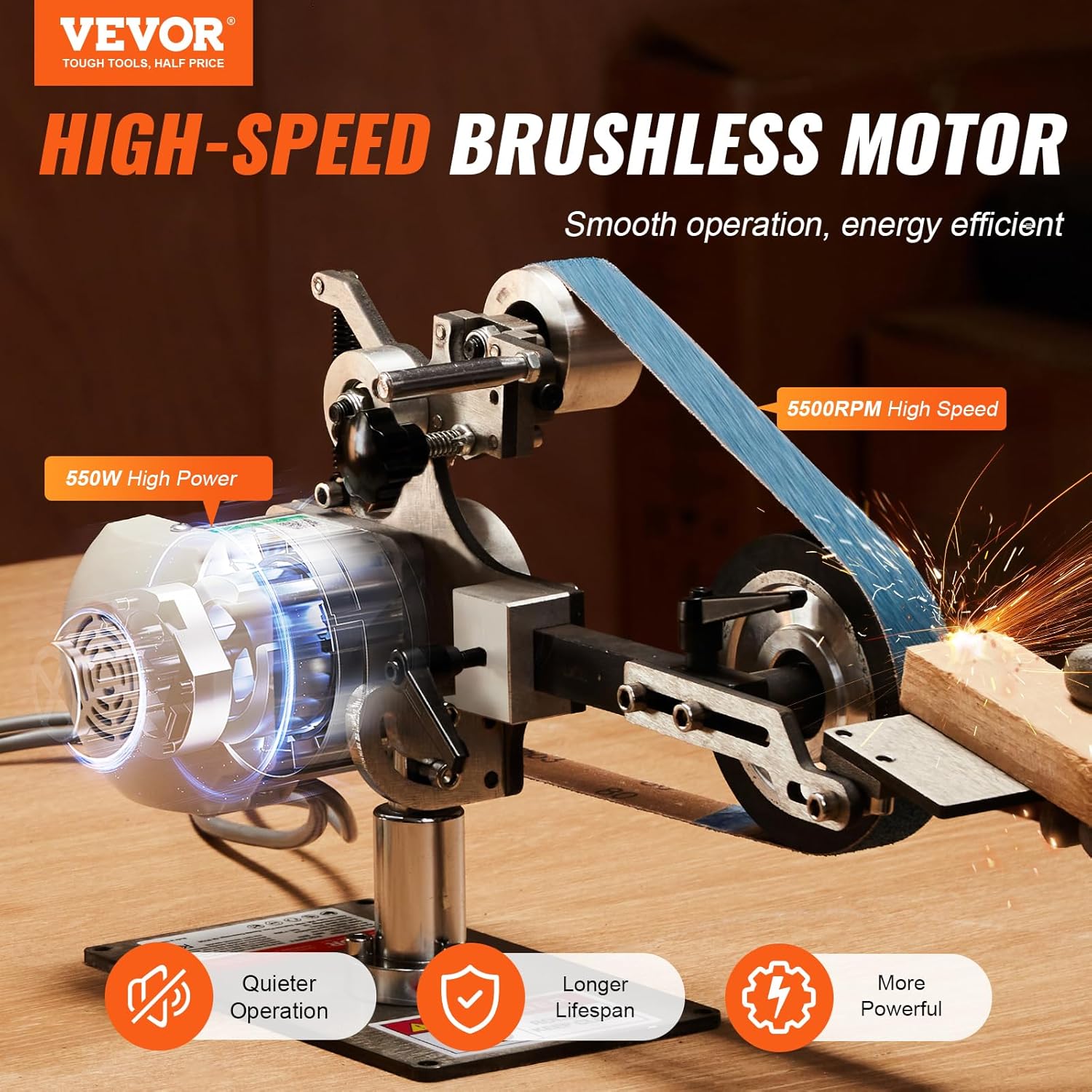
A belt grinder is exactly what it sounds like: a machine that runs an abrasive belt — think a long loop of sandpaper — over a flat platen or around a contact wheel to remove metal, shape edges, and smooth surfaces. The “30×1” you’ll see on spec sheets refers to the belt’s dimensions: 30 inches long by 1 inch wide. That’s a compact format, popular for knife making and light weld cleanup, but it comes with real constraints that bite you the moment the job outgrows it. If you’re outfitting a bench for the first time or trying to decide whether your current machine is the bottleneck, this article lays out the decision clearly — what the small-belt platform does well, where it runs out of road, and how to match the machine to the actual work on your bench.
| EDITOR'S PICKVEVOR Belt Grinder Sander | Mid-tierEX ELECTRONIX EXPRESS Mini 1 x… | Budget pickMini Electric Belt-Sander Knife… | |
|---|---|---|---|
| Motor Power | 550W | — | — |
| Variable Speed | ✓ | ✗ | ✓ |
| VFD Included | — | ✗ | — |
| Belt Size | 30 × 1" | 1 × 30" | — |
| RPM | — | 3400 | — |
| Price | $209.90 | $69.99 | $45.99 |
| See on Amazon → | See on Amazon → | See on Amazon → |
What the 30×1 Format Actually Gives You
The appeal of the 1-inch-wide, 30-inch belt grinder is density of features per dollar and per square foot. These machines typically weigh 20–40 lbs, bolt to a standard work bench or mount on a pedestal, and draw 1–2 amps on a standard 110V household circuit. For a knife maker grinding a bevel or a welder knocking down a tack before inspection, that’s often everything needed.
Variable speed — usually controlled by a motor-speed controller (a variable-frequency drive or a simple rheostat, depending on price tier) — matters more than most buyers expect. Running a fresh 36-grit ceramic belt at full speed on a thin knife blank generates heat fast enough to ruin a heat treat in under ten seconds. Dialing the belt surface speed down from 3,000 SFPM (surface feet per minute) to 1,500 SFPM gives you more control and more dwell time between passes. For weld finishing on thin-gauge sheet, lower speeds also reduce the risk of burning through the HAZ (heat-affected zone — the area around a weld that’s already been stressed by heat).
By the numbers:
| Belt size | Typical surface area | Common motor range | Typical belt cost (each) |
|---|---|---|---|
| 30×1″ | 30 in² | 1/3–3/4 HP | $2–$6 |
| 48×1″ | 48 in² | 1/2–1 HP | $3–$8 |
| 72×2″ | 144 in² | 1–2 HP | $6–$18 |
| 72×4″ | 288 in² | 2–3 HP | $10–$28 |
Belt cost estimates are approximations based on typical industrial distributor pricing tiers; verify current pricing directly with your supplier, such as MSC Industrial Direct (mscdirect.com), by searching the belt size and grit you need.
The 30×1 format’s consumable cost is one of its clearest advantages. Belts in common grits are available through major industrial distributors at pricing that makes stocking a full grit progression — 36 through 400, plus compounds and non-woven finishing belts — practical without breaking a supply budget. A 72×4 belt that costs $20 or more each changes the math on frequent grit changes, and frequent grit changes are the real productivity lever that most operators underuse.
For shops setting up a first dedicated knife-making or light fab station, an entry-level variable-speed machine handles the work without demanding 220V service or a dedicated circuit. Mini — $45.99
Where the 30×1 Hits Its Ceiling
Here’s where you need to be honest with yourself about what the machine will actually see.
Contact wheel diameter. The contact wheel is the wheel at the end of the machine that the belt wraps around — its diameter determines the tightest curve you can grind into a blade’s plunge line or a part’s inside radius. A 30×1 machine typically ships with a 4–5 inch contact wheel. That’s fine for hollow-ground knife bevels and general deburring, but inadequate for tight inside curves or for work where you need a specific wheel profile (serrated, rubber durometer, stepped). Premium 30×1 platforms from builders like Bader or Burr King offer interchangeable wheel systems, but the budget-tier machines don’t — you get what’s bolted on.
Platen flatness and tracking stability. On cheap machines, the platen (the flat backing plate that supports the belt during flat grinding) flexes under load. You’ll feel it as chatter or see it as inconsistent stock removal across a pass. If you’re grinding a kitchen knife to a specific geometry, platen flex is the enemy of repeatability. Mid-tier and premium machines use aluminum or steel platens that are ground flat and stay flat. This is one of the few areas where the spec sheet won’t tell you the truth — you need either hands-on time with the machine or a review from someone who’s run it under load.
Thermal management and duty cycle. A 30×1 machine running a 1/3 HP motor is not designed for continuous production. Run it hard for 20–30 minutes, and a cheap motor will thermal-cut or just cook its windings. If your shop runs weld cleanup as a regular station — not occasional work — you need either a machine with a higher-duty-cycle rating or a step up in belt width and motor size.
OSHA 1910.215 and ANSI B7.1 compliance. OSHA’s abrasive wheel machinery standard requires that all abrasive machinery have guarding adequate to protect the operator from contact with the abrasive surface and from fragments in the event of a breakage. Belt grinders aren’t exempt. On the floor of a job shop subject to inspection, a machine without proper guarding, work-rest adjustment capability, or a legible rated speed label is a citation. Verify the machine you spec ships with compliant guards and that the belt speed rating is printed on the machine or available in the manual.
ANSI B7.1 — Safety Requirements for the Use, Care and Protection of Abrasive Wheels, published by the American National Standards Institute — extends this framework to belt abrasives and should inform your purchasing checklist. The standard is available for purchase directly through ANSI; search their standards catalog at ansi.org for the current edition and any published addenda.
For daily weld finishing at a dedicated station, you’ll want a machine with real duty-cycle headroom. EX — $69.99
The Decision Frame: Matching Machine to Work
The purchasing conversation usually collapses into one of three actual use cases. Here’s the honest decision tree.
Use Case 1: Knife Making, One or Two Blades at a Time
If you’re grinding bevels, shaping handles, and finishing edges on a hobby or small-production basis — say, fewer than 10 blades a week — the 30×1 format is not a compromise. It’s the right tool. The narrow belt lets you track close to a plunge line without collateral material removal on the flat of the blade. The low consumable cost means you can run a fresh belt for every blade and not wince at the waste.
The variable-speed controller is non-negotiable here. Fixed-speed machines exist at this form factor, and they’re fine for wood, but metal knife work without speed control is a heat-treat gamble on every pass. Spend the extra $40–$80 to get the variable-speed version.
VEVOR
$209.90
In stock on Amazon
Check price on AmazonAt the budget end of this category, you get a functional machine that’ll run 30×1 belts and has a speed control knob. What you give up is tracking precision, platen quality, and longevity. For a hobbyist or someone just learning to grind bevels, that trade is fine. Mini — $45.99
If you’re building blades to sell or need consistent geometry across a batch, the mid-tier machines justify themselves in saved labor. A belt that tracks straight every time and a platen that doesn’t flex under moderate pressure turns a two-hour grind session into a repeatable process. EX — $69.99
Use Case 2: Weld Cleanup and Fabrication Shop Prep
Weld finishing — blending a weld bead flush with the parent metal, removing spatter, or prepping a surface for coating — is where the 30×1’s narrow belt creates a real limitation. Blending a 6-inch weld seam with a 1-inch belt takes multiple overlapping passes. A 2-inch belt cuts that time roughly in half; a 4-inch belt makes it a single pass. For occasional weld cleanup — a few joints a day on a fab bench — the 30×1 still earns its floor space because it handles everything else (deburring, edge breaking, tool sharpening) that a wider machine does clumsily. EX — $69.99
But if weld finishing is a production station — multiple operators, multiple shifts, or tight cycle-time requirements — you’re looking at a 72×2 or wider machine, probably with a 1–2 HP motor on 220V. The cost jump is real: budget 30×1 machines run $80–$200; a quality 72×2 machine from a brand like Burr King or Bader will run $800–$2,500 depending on configuration. As The Fabricator has covered in its belt grinding guidance, matching belt-to-work contact area to the actual workpiece size is the primary driver of material removal rate — narrow belts on wide seams are always a workaround, not a solution.
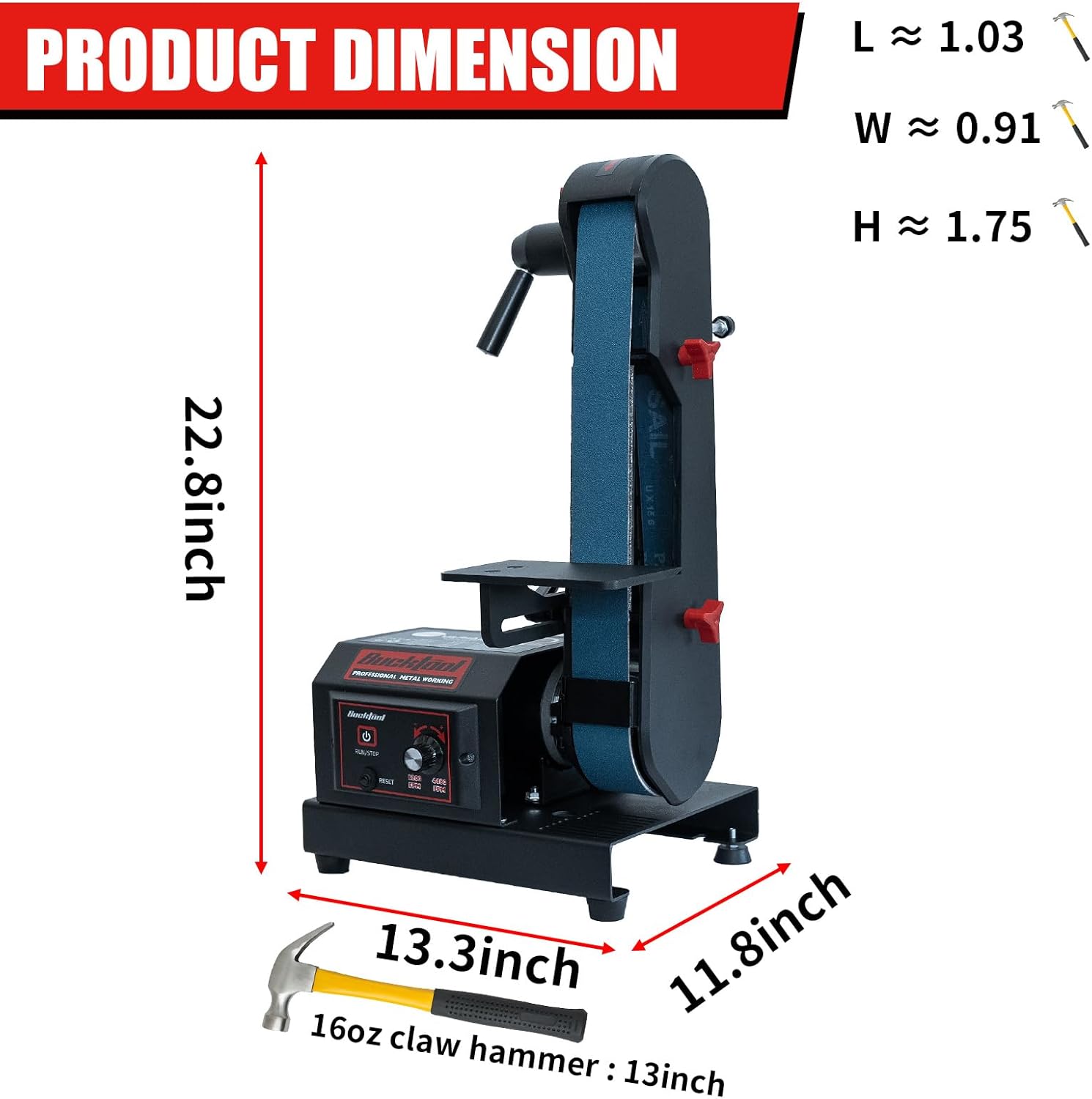
Bucktool
$288.84
In stock on Amazon
Check price on AmazonUse Case 3: Tool Room or Small Job Shop Outfitting a Crew
Tool-room managers outfitting a multi-person crew face a different problem: the machine that’s right for occasional knife work is wrong for the machinist who’s running it six hours a day for deburring and radius work.
Here, the calculus shifts to uptime. A $120 machine that fails in eight months costs more in downtime and replacement labor than a $350 machine that runs for five years. Duty cycle, motor quality, and parts availability (Can you get a replacement belt tracking pulley in three days? Does the manufacturer answer the phone?) matter more than the purchase price.
VEVOR
$209.90
In stock on Amazon
Check price on AmazonFor a crew setting, also consider that a single premium 30×1 machine is often the wrong answer — two mid-tier machines are better than one premium machine, because the second machine is a spare. Redundancy for a $300 bench tool is a legitimate strategy in a job shop where grinder availability is a daily dependency.
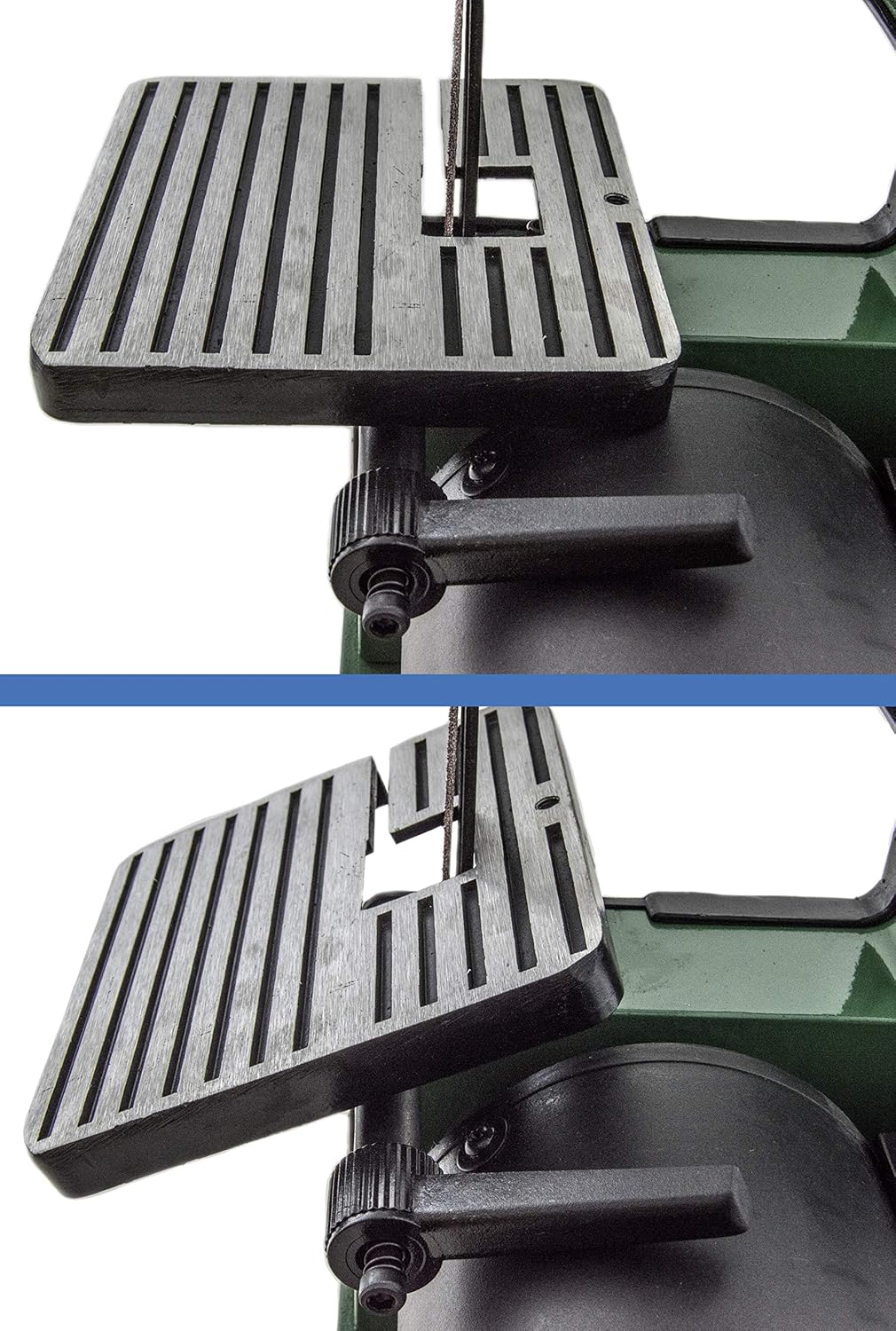
EX
$69.99
In stock on Amazon
Check price on AmazonConsumables: The Cost You Didn’t Put in the Budget
Belt cost per grind hour is the number most buyers ignore and most regret later. Abrasive belts for the 30×1 format are widely stocked by industrial distributors including MSC Industrial Direct — search their catalog by belt size, grit number, and backing type to get current per-unit and volume pricing before committing to a machine purchase. Pricing varies meaningfully by abrasive type: aluminum oxide belts sit at the low end, zirconia alumina belts step up, and ceramic-grain belts command a premium but outlast the others significantly in hard-metal applications.
At optimal use — swapping the belt when it glazes rather than running it to death — a serious knife maker might burn through 2–4 belts per blade across multiple grits. That consumable cost per blade deserves its own line item in any production cost estimate.
The mistake is running belts too long. A dull belt generates more heat, removes less metal, and causes more operator fatigue. The economics of fresh belts are almost always better than the economics of running a belt until it falls apart. Buy in volume (10-pack pricing is standard from major suppliers), keep a full grit progression on the shelf, and treat belts as a line-item expense rather than a supply you manage by feel.
EX
$69.99
In stock on Amazon
Check price on AmazonThe Bottom Line
If the work is knife making, light deburring, and occasional weld cleanup on a bench that also does other things, the 30×1 belt grinder is the right format — buy the variable-speed version, get a mid-tier machine if you’re doing this more than twice a week, and stock belts in volume.
If the work is production weld finishing, continuous fab prep, or you’re running multiple operators, step up to a wider belt before you buy the small machine and discover the limitation the hard way. The 30×1 doesn’t grow with you; it’s a purpose-built tool, not a platform.
The clearest decision rule: if your widest regular workpiece is narrower than 4 inches and your daily run time is under two hours, the 30×1 is enough. If either condition fails, size up.